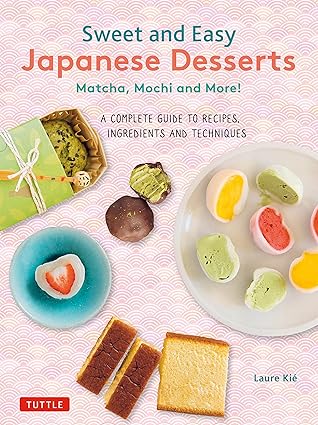
Japanese desserts have a reputation for being delicate, artful, and often less sweet compared to their Western counterparts. Sweet and Easy Japanese Desserts: Matcha, Mochi and More! by Laure Kie (Tuttle Publishing) offers a beginner-friendly introduction to this world of sweet treats with lots of step-by-step pictures as well as visual guides. Similar to other cookbooks, there are instructions on equipment and ingredients needed in the front section. One of the strongest aspects of this book is its simplicity. The instructions are geared towards novices without technical language or complicated techniques. Having said this, simplicity sometimes comes at a cost: certain details that could make or break a recipe are not mentioned. For example, when working with sweet bean paste, I discovered that reducing it further during cooking would have improved the texture and flavor. A note about this in the instructions would have been helpful.
As expected, many recipes revolve around classic Japanese dessert staples: sweet beans, mochi, and matcha (green tea). These ingredients are central to traditional desserts such as wagashi, and the book does a good job of showcasing their versatility. If you enjoy these flavors, you’ll love the recipes. However, if you’re looking for a wide range of flavors, the selection might feel a bit repetitive. The inclusion of some Chinese-inspired desserts such as egg tarts or strawberry wonton toward the end adds a twist and helps break up the monotony.
We tested a few recipes in our kitchen: Red Bean Cake, Mochi, and Castella Cake.
Red bean cake – This tasted mildly sweet with an earthy flavor from the red bean paste. It’s a soft dessert and easy to chew.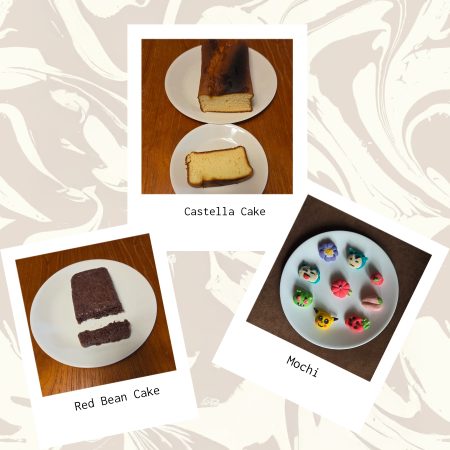 Our problem was two-fold – we didn’t reduce the red bean paste enough so there was a lot of moisture which affected the gelatin ratio. Regardless, it still tasted yummy.
Mochi – Basically after the dough is formed, one can add all sorts of bean paste or other fillings. The child we made mochi with only wanted chocolate chips. To make really nice mochi, experience is required. Since we had none, our mochi dough was too thick and it felt like we were eating more dough than filling. I’m not sure if perhaps we bought the wrong brand of rice flour, because we used a lot more rice flour than listed in the recipe to make things work.
Castella cake – This recipe was fairly solid and the cake came out firm and tasty, given so many eggs were required. We admit we burned the cake since our small convection toaster oven seemed to bake things faster than a normal oven. Out of the three things we tried, we would definitely make this one again!
If you’re new to Japanese desserts, this book is an excellent starting point. The clear instructions and abundant photos make it easy to follow along, even if you’ve never worked with ingredients such as glutinous rice flour or azuki beans before. Experienced bakers or those seeking advanced techniques might find the book too basic, but for novices—it hits the mark. If you’re curious about wagashi or simply want to expand your dessert repertoire, this book is worth adding to your collection.
Book link: https://www.tuttlepublishing.com/japan/japanese-desserts-9784805317709