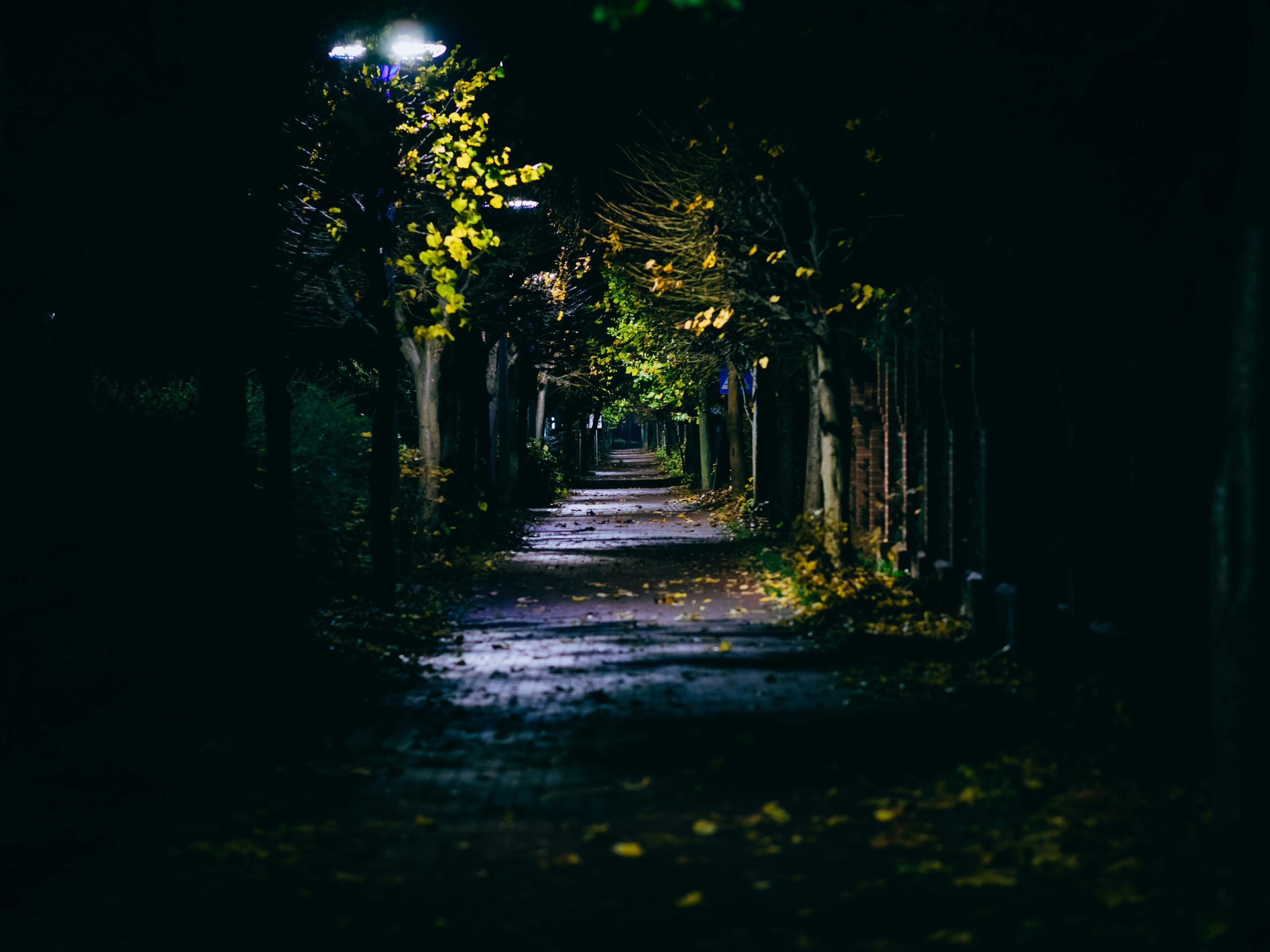
Art by Krzysztof Kowalik
The First Lesson
I was only sixteen and his mother said stay in public — not to me — to him — but I heard it anyway the way you hear things that are meant to protect someone else and land on you as instruction —
stay in public — as if the public was a kind of safety as if being seen was the same as being held —
and I did not know until much later — until I had enough distance to look back — that the watching was love that the curfew was love that stay in public was a mother’s way of saying I see you going somewhere and I want you to come back —
but at sixteen you do not read it that way
at sixteen you just go
and he went to a Catholic boys school and there was a curfew and his mother would tell him — say goodnight — the particular instruction of someone managing the edges of something she could feel but not name —
and he said goodnight every time
goodnight
and I thought that was how it went — the goodnight and the curfew and the staying in public — I thought that was what it meant to be chosen to be worth the curfew to be the reason someone said goodnight —
until the soccer star
and then I learned — not all at once — the learning was slow the way the first insecurity is always slow the way it arrives not as a revelation but as a quiet rearrangement of how you see yourself —
oh so I can be left
oh so I am not enough for everyone
oh so this is what that feels like
***
Have A Good Life
he said have a good life
and I said you too
and that was it — two people who would always love and respect each other and we both knew what came next — the erasing not of the feeling — you cannot erase the feeling — but of the life — the shared coordinates the knowing where someone is on a Tuesday —
and I have been thinking about how one undoes that
whether time is the tool or just the distance
whether undoing is even the right word for something that was real —
but what I keep coming back to is not the ending
what I keep coming back to is the dinner
the candles
the soft music
the romantic instrumental playing as we danced slowly not wanting to arrive at the end of the song —
and he gave me the postcard
wooden
from Moscow
and I did not know then what I know now —
he saw me writing
that is the thing I cannot put down
he saw me
and I hung the card to remind myself — I will go back —
and then I gave him a photo of home and I saw something change — a kind of sadness arriving quietly in an ordinary gesture — a house still whole but not the same anymore —
and I am trying
***
What I Learned Instead
and so I stopped —
not all at once —
just gradually the words going back inside before they reached the surface —
because if I said it completely I hurt people
and I did not want to hurt people
I only wanted to be heard
and silence became armour and prison at once
and I learned to mask —
I am fine —
my body saying it before my mouth does
and when it became too much I ran
because running always felt like the only way to stay whole
and the heaviness stayed anyway
it did not leave with the running
and I am learning now — slowly — to stay
even when everything in me says leave
not because it is easy
but because I am beginning to understand
that staying is not the same as being trapped
and maybe winning is just the push —
the small persistent thing
that does not know
how to stop
Adele Arrazola is a Filipino-Canadian writer and community builder based in Vancouver. Born from her own experience of isolation as a newcomer to the city, she founded The Ripple Room in 2026 — a women’s community that grew to over 600 members in four months. She found her way back to writing on the beaches and trails of British Columbia, where the landscape quietly returned her to herself. She writes the Ripple Effect blog, featuring Super Humans, interviews with founders and social impact leaders, and works at CNIB as a Program Lead in employment. She publishes poetry on Hello Poetry as adelethewriter. Her debut poetry collection, The Little Things That Move The Heart, is forthcoming.
2 comments
This is amazing Adele! Loved it so much. Thank you for this.
This is a really strong first piece, Adele. It’s thoughtful, emotional, and very well expressed. I hope you keep writing and sharing more.