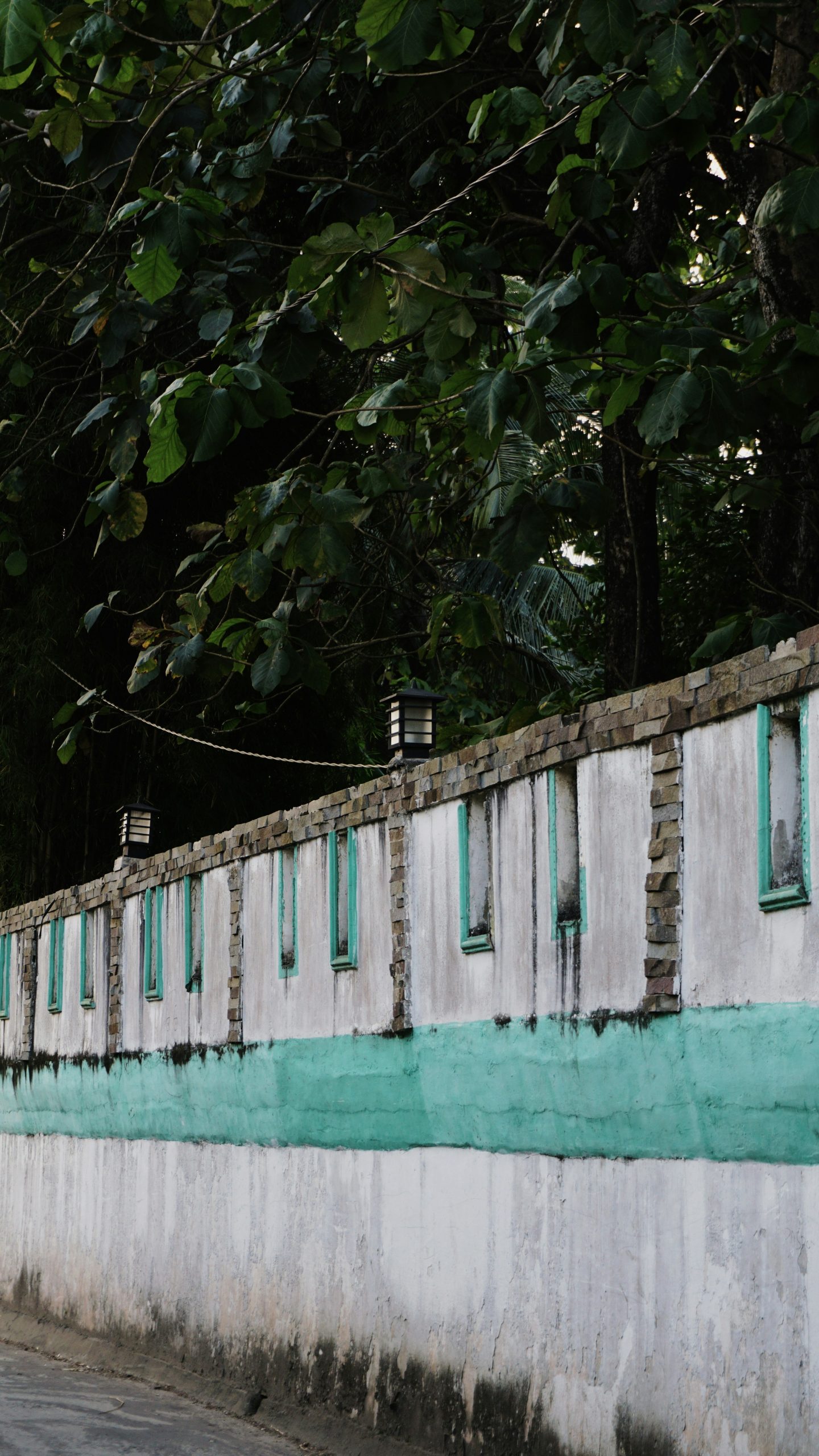
Photo by Miftah Dudung
The strangest thing about coming back home for Melani was the dizzy spells that had come and gone ever since she stepped into her childhood home.
At first she thought the dizziness was the leftover from her intercontinental plane journey, or jetlag, or a shock from the heat of the tropical weather here.
But after two weeks at home, the dizziness kept coming back at random moments. The worst so far was last night at dinner.
The dizziness slammed her, and her world turned like jelly around her, moving and twisting and pulling. Her Papa sat in front of her, and he did not notice her. He was busy ladling pork bones and bean curd soup into his bowl while waiting for the answer to his question to her earlier: Have you thought about coming back here to live in Palembang again?
The dizzy spell began when she was trying to find an answer to that question. Her twisting world made thinking impossible, and she just wanted to throw up.
How could someone get a dizzy spell with motion sickness when asked about coming back again to live in her own hometown?
Her hometown Palembang was not a horrible place to live. The bustling city in the south of Sumatra Island, Indonesia, was picturesque with its many meandering rivers that converged into one major river, the Musi River—a mud-coloured, winding river that flowed through the city with the majestic Ampera Bridge connecting the two riverbanks. Palembang was still her birthplace despite the changes to the city, to the people she once knew.
When she came home this time, the wet market close to her childhood home was gone. It was replaced by a big chain supermarket. Her late grandmother used to take her to the wet market every Sunday morning to buy groceries. Even now, she still remembered the smells and the sounds of the market—the fragrant spices, the shouts of various sellers promoting their stalls, the lively haggling, the pungent sharp smell of the always backed-up sewers—all clung to her, tight and persistent.
She did not answer her Papa’s question at dinner. She just stuffed a spoonful of rice into her mouth and shook her head in the most inconspicuous manner possible. Papa let out a disapproving snort and that was it.
After dinner, she excused herself to go in her bedroom and stayed there ’til her Papa went to bed. Her dizziness went on all night.
She felt slightly better in the morning when she woke up, and her Papa was already busy downstairs in the family restaurant he inherited from his father and grandparents, a restaurant his grandparents established in 1952. Its specialties included stir-fried rice noodles, Chinese herbal soups, claypot frog legs porridge and the steamed yam cake. It had been open since five a.m. to cater to the night shift workers at the nearby port.
She spent the day scrolling on her phone, watching a TV series, and deciding against going downstairs to help her Papa in his restaurant. She had tried that before only to be left feeling inadequate. Whatever she tried to do, someone else could do it a million times better than her. Her Papa’s snort added salt to the wound.
At the end of the afternoon, she decided to sit with her Papa on plastic chairs right outside the restaurant’s front door. The restaurant was in a mixed-use building—first floor was the restaurant, second floor was their family home. It was not big with only six round tables, each table with four chairs, and dull green-painted walls. A ceiling fan whirred furiously, blowing various calendars that hung on the wall. The calendars bearing the photos of some famous Hong Kong movie stars were New Year’s gifts from various banks.
They sat in silence until her Papa sighed—
“You are now thirty. You should get married soon. Being a spinster is inauspicious, you know?”
Her Papa’s voice startled her. Her Papa spoke while his hand dunked the teabag from his all-time favourite tea—a rose-scented tea called Prendjak, which was produced in Riau, not that far from Palembang—into the hot water in his zebra-patterned enamel cup.
A cacophony of the car and motorcycle engine ruckus, and the blaring of horns from the congested traffic on the road in front of the restaurant accompanied them like a background theme song.
“Melani? You hear me?”
A stinging anger jabbed her. Spinster. She had caught that word just fine even among the hubbub of the traffic.
“I am not going to be a spinster, Pa.”
“So you have a boyfriend there? In Montreal? Why don’t you bring him home to meet me?” Boyfriend. Melani swallowed a large chunk of saliva. It did moisten her throat, but failed to calm the quickening of her heartbeat. Her right hand instinctively squeezed her jeans pocket and she murmured, “No.”
A rush of guilt forced her to shift her gaze to the broken cement pavement below her slippers. At least the broken pavement did not judge her.
Papa looked at her with a half-tilt of his head as his hand dipped the teabag in his cup a few more times. “Good. I don’t want you to get involved with those bule guys.”
“What’s wrong with bule?” snapped Melani. Her Papa had used the Indonesian slang term to refer to Caucasians. Her heart thumped much faster within her chest cavity.
“Well, look at their lifestyle! Sex, alcohol, drugs! I don’t want you to get heartbroken because of them!”
“You can’t possibly judge all bule to be the same, Pa. Some are jerks, some are good, just like men here too.”
“Look, Mel. You have spent your life abroad since you were eighteen, your Mama was insistent that you had to go get your education abroad. You earned your degree and now you work and live in Montreal. An engineer! I am so proud of you—“ Her Papa took a deep breath, then came the punchline, “But you are still a Chinese-Indonesian woman. You have your roots here, your culture. You should not forget them,” Papa looked up to the cloudy sky, and continued, “Your life there in the Western culture should not make you forget the way here in the Eastern culture, our culture.”
“I don’t forget, Pa.”
“The last time you came back here was five years ago, on your Mama’s funeral. This time you come home you seem more and more distant, like a foreigner trying to find your way in your own hometown—”
The words from her Papa’s mouth hung heavy on the benzine-smelling air, slapping Melani and grounding her even more to her reality here and now. He was right, Melani did feel like a foreigner —though it was not a surprise given all the changes around here. Her head began to turn again. Could this dizziness be a kind of motion sickness? she wondered.
Her Papa had just closed his restaurant. Some of his employees were still cleaning the floor and the kitchen of the restaurant. The smell of used frying oil and pork lards drifted from inside the kitchen, the kind of smell that brought back memories of childhood for Melani, when she used to run around among the soot-covered woks, pots and pans in the restaurant’s kitchen before Mama called her to go upstairs, to their home on the second floor.
A loud screeching noise from the chaotic traffic on the main road in front of the restaurant startled Melani, while her Papa seemed unfazed by it. He was so used to the kind of daredevil, cheating-death deed that was a common happening in the traffic here, and the omnipresent traffic jam. A truck filled to the brim with piles of bananas on its cargo had braked hard and blasted its horn hysterically when a woman riding her motorcycle swerved into its lane. The woman stopped, shouted some profanities to the truck driver and went on her way, and the driver of the truck stuck his head out of his window and shouted back for good measure. That was it. Life went on again.
Her Papa squirmed, then he sat up and looked straight at Melani. “Listen, I have asked your gū gu Acen to arrange a meeting for you.”
Melani turned to stare at her Papa, her world twisting like jelly again. Acen was her Papa’s younger sister—she was addressed as gū gu in Chinese—whose husband divorced her a few years ago and married another woman half his age. Since then, gū gu had busied herself, dabbling into the intricacies of Chinese astrology with all the zodiac animals, as well as calculating and predicting luck and fate based on the birth date, year and hour.
Melani clenched her fists and blurted out,“Why? What meeting?”
Her Papa coughed. “Well, there is this family she knows. A good family with good roots here in Palembang. They have a son—“
“You will arrange a matchmaking for me?”
“Listen, Mel …”
“No. No way.”
“Acen has checked him out. See, your zodiac and his zodiac match perfectly. You were born in 1995, the year of the Pig. He was born in 1991, the year of the Goat. Pig and Goat are a great match!”
“No.”
“But you know him.”
Melani tilted her head. That got her interest. “Who?”
“Herman. He and his family used to live in that alley across the street from here. Then they moved away when he was fifteen. The two of you played a lot together when you were kids! Remember him?”
She did. Herman. She used to call him Jangkung because he was so lanky, and he used to call her Jamur on account of her thick, mushroom-like hair. Jangkung meant lanky, and jamur meant mushroom in Indonesian.
“Remember him?”
Melani gave a weak nod.
“Good. I’ll ask Acen to arrange the dinner with his family. You will fly back to Montreal the day after tomorrow, right?”
“Papa, I … I don’t know.” Jamie came hurtling back into her mind. The reason, the real reason, why she decided to take this trip back to Palembang. The man—a blond, blue-eyed Canadian bule—had been her boyfriend for the past two years. They shared a one-bedroom apartment on the outskirts of Montreal. She had been a coward, she knew that, but it was for a valid reason. Something about Jamie would definitely be a deal breaker for her Papa. Something even worse than the fact that he was a bule—
“Well, you two don’t have to get married right away! Just get to know him again. You two were childhood friends! Always played together! Do this for your family, okay?” Her Papa’s voice sounded lighthearted like the matchmaking was not a big deal at all. He nodded a few times, and continued, “Your Mama was a headstrong, intelligent woman, an engineer like you too, Mel. But she also came back here and did what she had to do: got married and started a family.”
Papa’s gaze lingered on her for a bit, then he took his phone out from his pocket and began to type something on the chat app.
Melani froze. How she wished her Mama were here. Her Mama would have understood.
Like her, her Mama had also been a foreign-educated engineer who had worked in Jakarta before she became a victim of her company downsizing and returned to Palembang as a jobless twenty-nine-year-old. Her aging parents met her Papa’s parents, and they decided their kids were a good match. Her Mama had agreed to marry her Papa because it meant that her parents could enjoy their twilight years without having to worry about her future—after a daughter was married off, she was considered ‘out of the family house.’
Her Mama would sometimes tell Melani: I was trained as an engineer, Mel. But look at me now! A cashier in your Papa’s family restaurant! You have to go out there and live your dreams, okay? Don’t be a coward like me. You have to be braver than me.
Melani could sense a tinge of regret and bitterness in her Mama’s words, and she realized that she was like her Mama too. Coming back home meant that she would be back to her expected role as a dutiful daughter, who was prized for her obedience and service to the family.
Her Papa looked up from his phone and declared with an unmistakable glee, “I texted Acen and she texted back. She said tonight would be the dinner. She would arrange it.”
It was a done deal.
Melani’s dizziness intensified.
She was now certain that her dizziness was from motion sickness because motion sickness was what happened when your body sensed a conflict between your internal and external world. She was having motion sickness as she traveled in this life journey. What her heart wanted was in conflict with what her outside environment expected of her—she was disoriented.
#
The dinner was attended by Herman and his parents, Melani, her Papa and gū gu Acen. It was at a restaurant in a three-star hotel in downtown Palembang, a restaurant known as the place for posh wedding receptions as could be seen from the enormous, golden Double Happiness (囍, shuāngxǐ, a symbol of marriage) that hung on the wall.
The menu was exquisite: whole roasted duck, stir-fried vegetables with slices of abalone, fried rice with Chinese-style sausages, and potstickers filled with minced chicken and shiitake mushroom. All were dishes that would make her mouth water under normal circumstances, but her nervousness made all food tasteless. Her mind kept bouncing back and forth between Herman and Jamie.
She exchanged pleasantries with Herman and they gave each other updates on what had been going on in their lives. He earned a degree in accounting from a university in Jakarta and went back home after graduation to help his parents in their automobile showroom.
The dinner got more awkward as the topics of conversation between her and Herman dried out fast, and they ended up just staring at the dinner plate in front of them.
Once in a while Herman’s parents would ask Melani questions—
Do you like it in Montreal?
Do you like your job there?
Can you cook?
Melani answered Yes to all those.
After the dinner, the parents suggested that Melani and Herman went for a walk to have a chat, to get to know each other better. Melani simply wanted to escape from the dinner, so she agreed.
They were dropped off at the Benteng Kuto Besak Plaza at the bank of the Musi River, a spacious open-air space where they could walk along the river, sit on the bench, eat snacks sold by cart-pushing sellers, and watch traditional passenger boats (called ketek in the local dialect) passing by on the dark river water.
“It was not my idea, by the way,” Herman began to speak as they walked along the riverbank.
“What was not your idea?” Melani glanced at him.
“Getting the two of us together. You know—”
Melani stayed quiet.
“My parents and Acen agree that your zodiac matches mine well. Goat and Pig. Last year I had to break up with my then-girlfriend because according to the fortune teller, her zodiac was a horrible match to mine,” Herman continued, his voice trembled.
“I have the feeling I will face a similar problem.”
“You have a boyfriend in Montreal?”
Melani sighed, glanced at Herman, and nodded.
“Do you still love her?” She was curious.
“Who? My ex-girlfriend?”
“Yeah.”
“I do. Very much. Listen, it’s a secret—” Herman stared at her and leaned slightly to whisper, “I still keep in touch with her.”
Melani nodded.
“I am sorry,” Herman muttered.
“What for?” Melani turned and stared at Herman.
“I don’t mean to come in between you and your boyfriend.”
“It’s not your fault.”
“What’s his zodiac actually? Your boyfriend,” Herman tilted his head in curiosity.
“A bad match for a Pig like me.”
“Oh yeah? What?” Herman cocked his head to the right and his eyes widened in anticipation of Melani’s answer.
“1989. Snake,” Melani murmured.
Herman whistled softly. “Pig and Snake. Yeah. That is not good …”
Head down, they continued walking along the plaza that was bathed in a festive vibe from the colourful neon bulbs hanging in strings and wrapped around the palm trees. The whole place hummed alive with couples walking hand in hand, children running around, the crescent moon hanging low on the clear night sky, and the waves of the river gently lapping against the embankment.
Melani had grown up and lived in a family that did everything by zodiac compatibility, fortune telling and auspicious hour/day calculations to try their best to ascertain good luck. She knew that Jamie being born in the Year of the Snake in the Chinese calendar was the deal breaker for Papa, more than him being a bule. Strangely, it was not something she worried about when she was with Jamie in Montreal, not even when they visited the Chinatown there, or celebrated the Chinese New Year, watching the dragon and lion dance performance. Her hometown had cast things in a different light for her. She had no idea how to reconcile her life there with the expectations from her roots here.
Her right hand squeezed the engagement ring that she had shoved into her jeans pocket.
The ring she had not worn since she arrived in Palembang out of fear of her Papa.
She may have been caught up in the exhilaration of the sweet moment and lost her mind when she said yes to Jamie’s proposal. Now she believed that must have been the most careless deed she had ever done.
Her dizziness returned, her world twisting around.
She was not sure how to get used to living with motion sickness.
Lia Tjokro is a Chinese-Indonesian writer who was born and spent her childhood and part of teenage years in Palembang in Sumatra Island, Indonesia. She writes poems, novels and short stories in English and Indonesian. Her works have appeared in Porch Litmag, Kitaab, The Citron Review, Mekong Review, Harrow House Journal, and elsewhere. She has published one novel in Indonesian. Her IG is februalia1. She has lived and worked in Singapore and the US before, visited Canada (and fell in love with Montreal!), and currently she lives in the Netherlands with her husband, son and their family dog.