
Photo is property of the Louie family, provided by Mormei Zanke.
When her grandfather passed away, poet and essayist Mormei Zanke unconventionally honoured his memory – by writing about chop suey. This stir-fried meal of chopped vegetables and meat, all doused in a thick gravy, has largely faded from menus today, but the east-meets-west dish was wildly popular across North America in the twentieth century. It was the kind of dish Zanke’s grandfather cooked as a young man to support his family.
Zanke explores intergenerational cooking and memory in her most recent work, “Chasing Chop Suey: Tracing Chinese Immigration Through Food.” The essay combines reflections on the life of her grandfather, Ken Gain Sui Louie, whom she calls gung gung, with research and reporting on the Chinese American restaurant scene in New York, where the Calgary-born author now resides.
Writing and researching this essay was Zanke’s attempt, as she grieved, to know her grandfather better. “When my gung gung was alive, I couldn’t really have full conversations with him,” Zanke says. She had never learned Toisanese, her family’s dialect, and Louie’s English grew shakier as he aged. Though she shared an affectionate bond with her grandfather, she writes that his history felt more like fable than reality.
She had long been familiar with the rudimentary plot points of her gung gung’s life, beats that echo many immigrant tales: In 1950, Zanke’s grandparents left Guandong, China, for the prairies of Canada, “just wanting the best for their children and, by extension, me,” Zanke says. They started with little English, working in and eventually opening a series of restaurants in small-town Saskatchewan and Manitoba. These kitchens nourished working-class crowds – and often catered to Westernized palates – with fare like egg rolls with plum sauce, chow mein, and, of course, chop suey. With those chop suey sales, Louie raised a thriving family in Canada.
The sacrifices Louie made for the family’s sake – the long hours of labour, and the years of homesickness – struck Zanke as an inheritance of guilt; his toil was in her name. She describes the process of writing about Louie’s life as a way to reckon with the hardships her grandfather had endured, but also as an attempt to see him as more than the sum of those sacrifices. In “Chasing Chop Suey,” Zanke conjures Louie not merely as the legendary stock figure of heroic immigrant; she also honours the specificity of his humanity, portraying him as a man who loved button-up shirts, who fed his grandchildren pineapple buns, and who walked with his hands behind his back.
To connect with that specificity after his death, Zanke wanted to know more details about Louie’s past, to imagine the flavours and aromas of his restaurant kitchens. She began researching Louie’s old restaurants, most of which no longer exist today. She interviewed her mother and uncle, and unearthed old family photos of her gung gung as a young man at work, looking dapper in a black bow tie. The family had saved copies of Louie’s old menus, where she saw that chop suey was consistently a star.
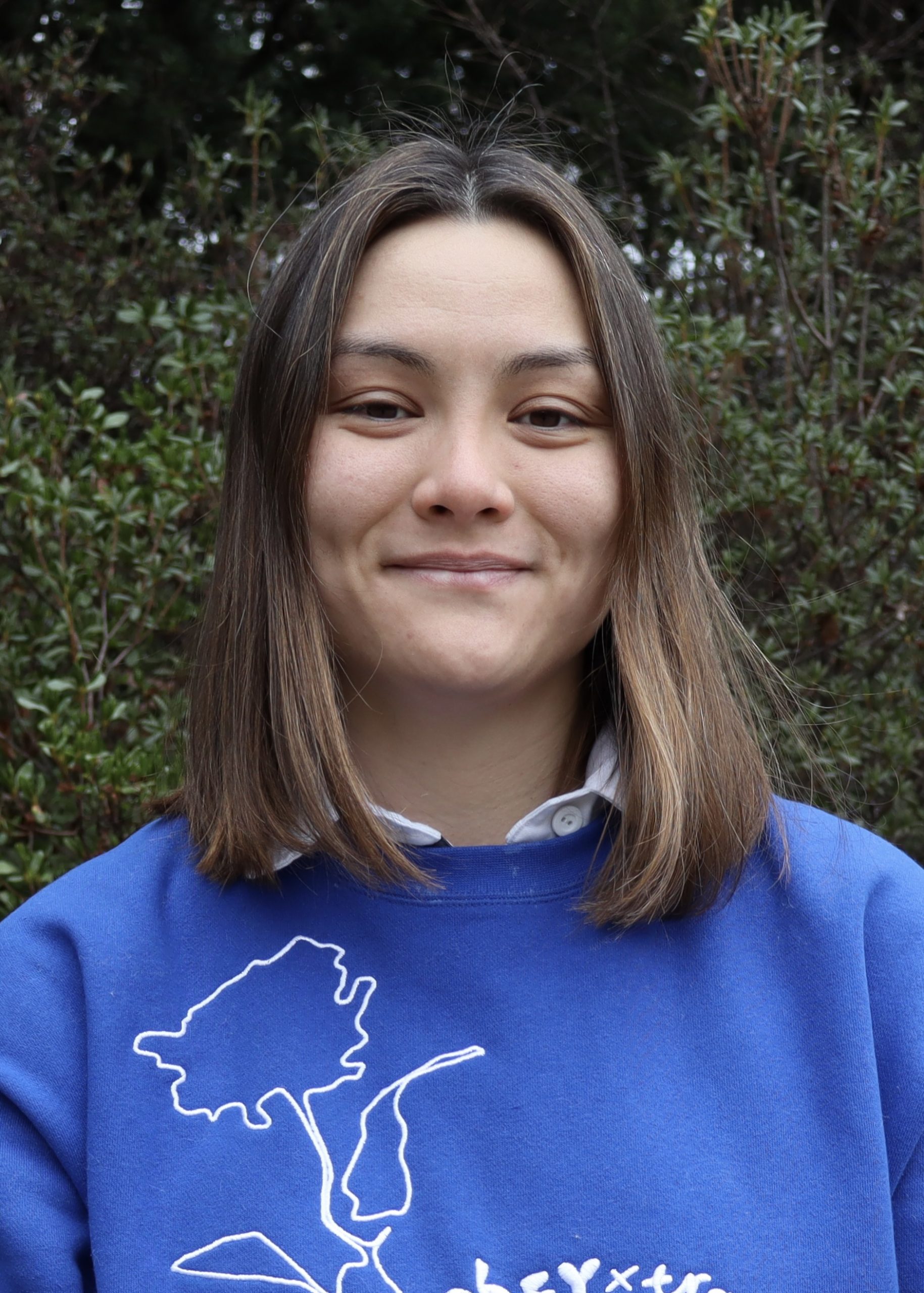
Chinese-Canadian poet and
writer Mormei Zanke
She also looked beyond her own family to investigate how the next generation of chefs is carrying on the spirit, if not the exact form, of chop suey today. Interviewing Chinese American chefs in New York, Zanke found parallels with her grandfather’s style of cooking. She describes, for example, how chefs like Calvin Eng of Bonnie’s, a Cantonese American restaurant in Williamsburg, serve up nostalgic yet innovative dishes like their wildly popular chau siu McRib. Although chop suey itself is no longer popular, Zanke says she was energized to see how children of immigrants continue to create food that represents hybrid identities and “intergenerational cooking.” The media commonly claims that Chinatowns across North America are dying. Still, in her reportage, Zanke equally observed parallel stories about the resilience and vibrancy of Chinese immigrant culture, representing the scrappy legacy of chop suey.
For Zanke, chop suey also became a metaphor for what author Fred Wah calls “hyphenated identity.” That mixed heritage is a theme Zanke is used to thinking about, as the daughter of a Chinese mother and a Caucasian father – and as an Asian Canadian living in the United States. Though it’s part of her daily reality, it isn’t something she’s used to writing about.
“I think I’ve honestly been uncomfortable declaring my race or identity,” Zanke says. As a biracial person, she says, “I often feel like a question mark for people. They’re always trying to figure me out, which is very uncomfortable. And I think there’s also this feeling of not belonging in either [Asian or white] space.” Because of these complexities, for a long time, she says her impulse was simply not to engage with race in her work as a writer – but something changed when she wrote “Chasing Chop Suey.” This time, Zanke decided that representing her heritage was important, if uncomfortable: “When I was writing this piece, I was like, Well, this is my personal experience. And I think a lot of people actually would understand that feeling of mixedness, or hyphenated identity. This is reality. We don’t live in binaries.” Writing this piece, she says, was “the first time I took more ownership of that identity.”
In addition to celebrating hyphenated identity, Zanke also thinks of the essay as negotiating a hyphen between forms: it’s a mix between journalism, personal essay, and poetry. In fact, “the piece could be seen as a longer poem,” Zanke says. She thinks of “Chasing Chop Suey” as relying on the structure of a poem, placing scenes alongside each other to evoke feeling and to inform one another indirectly.
That throughline of poetry in “Cashing Chop Suey” also helped Zanke lean into a sense of mystery surrounding her gung gung’s life. Poetry, Zanke says, often affords more space for the unknown than the personal essay, which demands credibility and autobiographical fact from its author. Insisting on what she sees as the spirit of poetry, even as her work aims to know her grandfather, her essay tries not to settle on definitive answers. Instead, she dwells on the kinds of complexities that chop suey has come to symbolize for her. Zanke writes: “The dish, in all its mixedness, contradictions, and uncertainty, is one way I can understand history’s dialectical oppositions. I can feel guilt and gratitude; pity and admiration; elation and remorse. I can accept that gung gung’s life was both one of loss and one of sustenance.”
Rachel Lam Glassman is a PhD candidate in English literature at Rutgers University, where she studies the connections between nineteenth-century Hong Kong and Asian North America, in the context of British and American imperialism across the Pacific. Rachel was born in Hong Kong and grew up in Vancouver, BC.