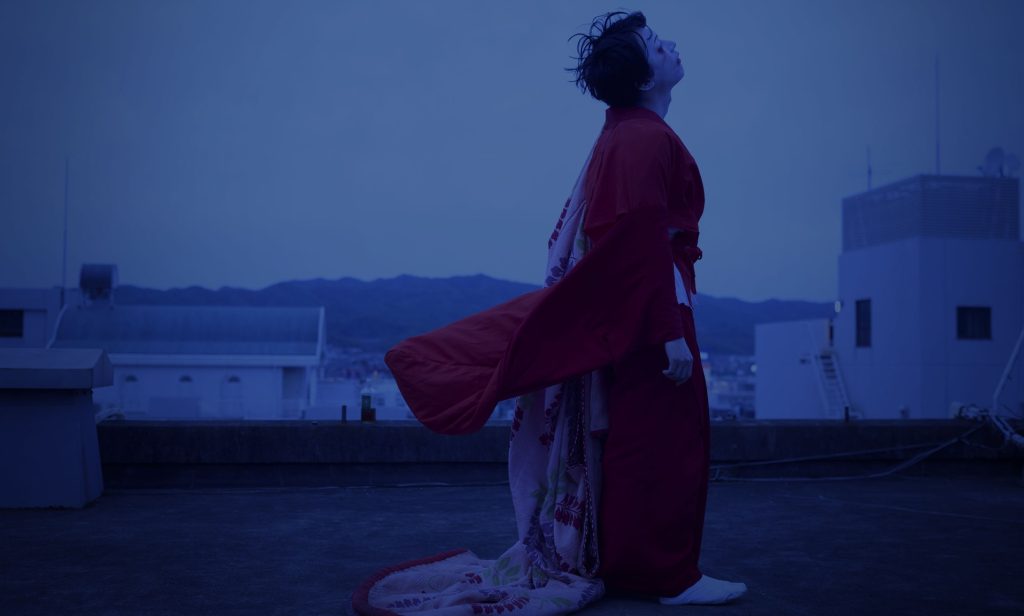
What is described today as Japan’s most recognized traditional performing art was, of course, just a form of popular culture for the masses during the 17th and 18th centuries in Tokugawa Japan, when kabuki was at the height of its popularity. Given time then, every unfashionable thing eventually becomes traditional or classical. For good measure, moviegoing as we now know it could be next in line for permanent rebranding, even as it continues to stare down the dogged evolution of tech-driven human habits that has been chipping away at the industry’s market share since the 1950s. For this reason, there is some irony in making the case that Lee Sang-il’s latest film is an excellent example of why moviegoing is one pleasure worth preserving. Kokuho is Lee’s third adaptation (by screenwriter Okudera Satoko) of author and former kabuki stage assistant Yoshida Shuichi’s eponymous 2018 novel, which chronicles the lives of two rival actors in a famed kabuki family. A resplendent piece of cinema, it recalls Chen Kaige’s Farewell My Concubine (1993) in terms of its historical epic narrative and of how life and the theatre are effortless mirror images of each other. The film’s visual charisma is also a credit to Tunisian cinematographer Sofian El Fani, alumnus of several notable contemporary French films, and production designer Taneda Yohei, who has worked in both Japan and Hollywood. Indeed, to witness the sheer iridescence that these artisans have captured unfold at scale in a theatre is an experience to behold.
The story spans 50 years and opens in Nagasaki in 1964, where 14-year-old Kikuo (Kurokawa Soya) witnesses a crime gang assassinate his father (Nagase Masatoshi) after performing on stage at a family function. Esteemed kabuki actor Hanai Hanjiro (Watanabe Ken) has already spotted the boy’s skill as an onnagata (female impersonator) and later accepts his widowed mother’s request for him to be adopted and brought under sensei’s tutelage in Kyoto. A rigorous teacher, Hanai trains Kikuo alongside his son Shunsuke (Koshiyama Keitatsu) and sets them up as an onnagata performing duo. However, Hanjiro’s wife (Terajima Shinobu) opposes Kikuo’s criminal association and outsider status, and is later proven right when an ailing Hanjiro chooses an adult Kikuo (Yoshizawa Ryo) to inherit his stage name, thus igniting the conflict at the heart of the story. Humiliated, Shunsuke (Yokohama Ryusei) disappears for several years while Kikuo ignores warnings that his destiny is not secure regardless of his talent since he is not a kabuki purebred. After Hanai’s death, Shunsuke reappears and offers to reconcile with Kikuo, but is rejected. Kikuo’s downfall plays out exactly as predicted when he starts burning bridges with important community members and his adoption backstory into the Hanai family is exposed, leading to his banishment from the scene. It is only through the mediation of retired onnagata and living national treasure Onogawa Mangiku (Tanaka Min) that Kikuo can return to the fold and make peace with his past.
The origins of kabuki are quite vulgar and nothing like the prestigious image it wears today. Dating to the start of the Tokugawa shogunate in 1603, a Shinto priestess and her troupe began staging riverside pantomime performances in Kyoto, which gradually became popular as theatre for the townsfolk and named after its three core components: singing, dancing and artistic skills. Initially only performed by women, kabuki was a common pastime in Japan’s urban centres, but especially in its licensed entertainment quarters. But the shogunate soon banned female involvement in kabuki on moral grounds since many performers were prostitutes who took on patrons as clients. The role of the onnagata thus materialized from this sexist decree and although the ban was later lifted, the tradition of males playing female roles has stuck. Historically, the veneration of kabuki actors was no different from the obsession with pop idols today, with onnagata certainly having their niche of feverish supporters. Crossovers between the kabuki and film worlds do happen, with the most recognizable being Kagawa Teruyuki (real name) and Ichikawa Danjuro XIII (stage name), both of whom play exclusively male roles (and come with customary scandals to boot). In a more serendipitous example of art imitating life, actress Terajima Shinobu descends from a reputable kabuki family: not only are her father and brother noted kabuki actors, but her young son is continuing the family line and is training to be an onnagata.
Kokuho had its world premiere at the 2025 Cannes Film Festival’s parallel Directors’ Fortnight section in May, but given the magnitude of this work in addition to his solid two-decade odd career (including directing episodes of the 2022-2024 American television serial Pachinko), Lee deserved to be introduced in the main competition for the first time. Just five months after its June theatrical release in Japan, the film earned the distinction of being the highest-grossing live-action Japanese film of all time with a ¥17.37 billion (C$152 million) haul at the domestic box office, beating a 22-year record held by the sequel of a detective crime comedy adapted from a popular television serial. For comparison, only anime films have surpassed this figure in revenue, with the highest-grossing title to date yielding more than twice Kokuho’s total. When nominations for the 49th Japan Academy Film Prize for 2026 are announced later this month, it is certain that Lee’s film will sweep the nominations and winners. The film’s Japanese title means ‘National Treasure’ and refers to the double meaning of Kikuo as a living practitioner of the art form, but also of kabuki as Japan’s preeminent intangible cultural asset. Interestingly, this is a rare film whose Japanese title did not undergo an English translation for Anglophone marketability—likely so as to leverage on stylistic or exotic sentiment (La Strada, Yojimbo), but also just as likely to avoid confusion with the existing American franchise of National Treasure historical adventure films.
Brandon Wee
Kokuho is scheduled for theatrical release in Canada on 6 February 2026.