 The Last Brushstroke: An introduction to Words That Last (Caitlin Press, release September 18, 2026)
If the last chapter of a life is still unwritten, why do we keep treating it as though it’s already over?
I ask this as someone who has had to answer it twice. Once as an epidemiologist, trained to read a life as a set of risk factors and mortality curves. And once as a body — mine — that stopped walking at thirty-nine and forced me to find a different vocabulary entirely.
I was paralyzed from the chest down at thirty-nine. The statistical frameworks I’d spent a career trusting — the ones that made populations legible, that turned suffering into something we could measure and manage — suddenly couldn’t describe what was happening to me. I needed different words. I found them, eventually, in the Japanese aesthetic concepts I’d grown up with in Kumamoto and had half-forgotten during my years as a scientist in Manhattan: 軽みkarumi, the lightness that isn’t the absence of weight but the art of carrying it without being crushed; 余白yohaku, the active margin, the white space that isn’t empty but full of what’s about to happen; 物の哀れmono no aware, the bittersweet knowledge that a thing moves us precisely because it doesn’t last.
Words That Last, the essay collection this piece introduces, is built from that vocabulary. It’s a zuihitsu — Sei Shōnagon’s thousand-year-old form, “following the brush,” writing without forcing — organized around a single question I return to on every page: what do you do with what remains? Not what do you do about dying. What do you do with what’s still yours to shape, right up until you can’t shape it anymore.
What shūkatsu actually is
The word for this in Japanese is shūkatsu — 終活, literally “end activity.” It emerged in the mid-2000s as something closer to logistics than philosophy: pre-planned funerals, sorted assets, an ending note left behind so grieving families wouldn’t have to guess. Japan aged faster than almost anywhere on earth, and shūkatsu arrived as the practical response to that pressure. An entire industry grew up around it — shūkatsu trade fairs, planning notebooks, funeral packages sold like travel itineraries. Useful. Sensible. And, if you stop there, exactly the kind of administrative task North America already does badly — the will, the DNR, the checklist nobody wants to fill out. Only about a third of American adults have completed any kind of advance directive (Yadav et al., 2017), the most basic document meant to protect a person’s wishes at the end of life. And in Japan, despite all the cultural fluency with the word, most people who think about shūkatsu never actually complete it — one national survey found roughly seventy percent of adults at least thinking about it, but the share who had taken any real action, sorting digital accounts, physical belongings, was far smaller (Rakuten Insight, 2022), a gap a qualitative study of forty older adults in Nagoya traced to the anxieties, roles, and life histories that shape when and whether people act (Chan & Thang, 2022). The gap between intention and follow-through runs just as wide there as it does here.
Which tells me the checklist was never really the point.
Here’s what most translations miss: 活, katsu, doesn’t just mean “activity.” It carries the sense of life force — the same root that shows up in seikatsu, everyday life, living itself. Shūkatsu isn’t only preparing for the end. Read properly, it’s activating what remains. My father, eighty-nine years old and six years into widowhood, doesn’t call it shūkatsu when he greets my late mother’s photograph each morning and again before bed. But that’s what it is — a daily authorship of grief and joy both, a refusal to let either one cancel out the other.
I use the word “authorship” carefully. It stops being about disposal — of assets, of arrangements, of a body soon to be someone else’s problem — and starts being about what you still have to say, and who gets to say it if you don’t. Not planning your absence. Composing your presence, for as long as you still have one.
What creative agency looks like
Japan has a name for this impulse carried to its furthest point: 辞世の句, jisei no ku — the death poem. For centuries, poets, monks, and samurai composed a final verse in the hours or days before dying. Not a will. Not an instruction. One last act of authorship, aimed at nothing more than getting the ending right. Bashō wrote his in Osaka in 1694, a journey still unfinished even as his body gave out. The monk Ryōkan, dying three centuries later, wrote of a leaf falling — showing, in the same motion, both its front and its back. These were not resigned men. They met their last deadline the way they’d met every other one: hand still on the page.
I think of Hokusai the same way, at seventy-five, writing in the postscript to One Hundred Views of Mt. Fuji that nothing he’d drawn before the age of seventy was worthy of notice — and then laying out, decade by decade, exactly how much better he expected to get, sharper at eighty, penetrating the mystery of things at ninety (British Museum, 2017). His reported last words were a request for five more years, not to rest, but to finally become a true artist. I think of Willem de Kooning, painting through late-life dementia in the 1980s, the hand still working long after language and planning had started to fail (Townsend Center for the Humanities, n.d.). I think of Ryuichi Sakamoto, composing his final album, 12, during treatment for stage 4 cancer — each track dated like a diary entry, the whole record a man narrating his own remaining time through the one language he’d spent a life mastering (Sony Music Masterworks, 2023).
None of them filled out better forms. They picked up the instrument they already knew and kept going.
I’ve come to believe this is what separates a culture that authors its ending from one that merely administers it. Chie Hayakawa’s 2022 film Plan 75 dramatizes the alternative starkly: a near-future Japan where citizens seventy-five and older are offered free euthanasia, complete with a small cash allowance to “prepare” and a group cremation at no cost (Wikipedia, 2026). It plays as speculative fiction, but barely — Japan’s population was already twenty-nine percent over the age of 65 the year the film premiered (Coates, 2024), the same demographic pressure that produced shūkatsu in the first place. What makes the film unsettling isn’t the euthanasia. It’s the paperwork wrapped around it — forms, hotlines, quotas, the whole administrative machinery real shūkatsu also relies on, aimed here at a purpose that guts the word’s actual meaning. One critic called it less an argument about euthanasia than an indictment of how capitalism has made growing old with dignity unaffordable (Merican, 2023). The state hands its elderly citizens the paperwork of consent and quietly takes back everything else. This is shūkatsu with the katsu — the life force — surgically removed.
I wrote Words That Last against that inversion. Here are two of its pages.
From “The Coat I Kept”
“Possessions bring many worries.”
Kamo no Chōmei wrote this in 1212, from his ten-foot-square hut in the mountains outside Kyoto. He’d witnessed fires, earthquakes, famine — calamities that reduced grand houses to ash and revealed the futility of accumulation. His solution was radical simplification: a portable dwelling, a handful of objects, nothing he couldn’t carry.
I think of Chōmei often these days, as I practice shūkatsu. Organizing. Releasing. Choosing what comes forward and what stays behind.
The irony is not lost on me: Chōmei fled to the mountains to escape his possessions. I’m trapped in a wheelchair, surrounded by mine.
The decision arrives on a Tuesday. Or maybe Wednesday. I don’t remember which day, only that it feels ordinary — no moment of clarity, no ceremonial goodbye. Just a decision that arrives quietly, the way most important decisions do.
I’m going to donate the coat.
The long winter coat — light brown with a golden shimmer, puffy with trapped air — has been jammed in my bedroom closet for eighteen years. I bought it in New York more than two decades ago, back when I could still walk.
I don’t remember what I paid for the coat. But I remember liking it immediately — that unique color, the way light caught the fabric and made it shimmer. Not quite gold, not quite brown. Something warm.
I remember the photographs. Me in that coat, infant Maya cradled in my left arm, my right hand gripping the stroller handle. My face shows it — the contentment, the aliveness. A slight smile that says: This is my life. This is enough.
I kept it because I thought Maya might use it someday. That’s what I told myself. The practical reason. The justification for keeping something I couldn’t use, didn’t need, could barely reach in the back of that overstuffed closet.
But now, pulling it out into the light of my bedroom, I hear the truth underneath.
I kept the coat because letting it go meant accepting what I wasn’t ready to accept. That the young mother in the photograph is gone. That those walking days won’t return. That Maya has her own coat now, her own way of moving through winter, and she doesn’t need to carry mine forward.
I fold it gently into a large white garbage bag. The fabric compresses under my hands, all that trapped air finally released. I’m sure. And not sure. Both at once.
The bag looks smaller than I expected. Eighteen years of holding on, and it fits so easily into something I can lift with one hand.
Near the end of Hōjōki, Chōmei writes something that haunts me. After describing his simple life, his few possessions carefully arranged in his tiny hut, he suddenly turns on himself. He admits that the love he bears for his little hut is itself attachment. “Has my discerning mind just served to drive me mad?” he asks.
He has no answer. The text ends in silence.
I understand his doubt now. The coat wasn’t serving Maya. It was serving me — proof that who I was in that photograph still mattered, that those walking years weren’t erased by the wheelchair years.
But Maya has her own coat. Her own life. Her own way of moving through winter. She doesn’t need to carry my past.
That’s not inheritance. That’s a burden.
From “Six Greetings a Day”
“At that moment, my heart sang.”
My father’s voice comes through LINE, surprisingly buoyant. I can hear him smiling — that particular lift in tone he gets when he’s genuinely delighted.
“Someone remembered me,” he continues. “I thought: someone remembered me.”
He’s eighty-nine years old, and a saleswoman at the department store had simply said, “Thank you for coming back! You bought this again, just like last time!”
Such a small thing. And yet.
“Keiko, I was so delighted that I told her —” He pauses, and I can picture him leaning forward, the way he does when he’s about to share something important. “‘Thank you for remembering me. After my wife passed away, the opportunities to meet people — to talk to people — drastically decreased. Especially someone like you, a young woman. I feel so delighted!'”
I can hear the vulnerability in his voice. So hungry for connection that this acknowledgment became the brightest moment of his day.
“You know, Keiko —” His voice quiets again. “After your mom passed away, there are many days I don’t talk to anyone at all.”
“But I always greet your mother,” he continues. “When I wake up. When I start eating. When I finish eating. When I leave home. When I come home. When I go to sleep.”
Six times a day. Perhaps more.
“Of course, I wish my wife were still with me.” A long pause. “But I won’t dwell on it. I make the best of my life.”
He doesn’t transcend grief. He lives alongside it. He makes room for both the conversation with the woman who is gone and the conversation with the young saleswoman who sees him. He chooses both, daily, deliberately.
He tells me this story so I’ll know how he keeps going. But also, I think, so I’ll understand what shūkatsu means. Not as resignation or retreat, but as something braver: the daily practice of living fully within loss, of greeting what’s gone while staying open to what remains.
My father is eighty-nine. He talks to almost no one most days. He greets my mother six times daily. And still, when someone remembers him, his heart sings.
The return
So: if the last chapter is still unwritten, why do we keep treating it like it’s already over?
Maybe because unfinished sounds like failure, and we’d rather call it closed than admit it’s still open. But open is the more honest word, and the more generous one. My father teaches me this six times a day. Chōmei’s discarded hut teaches me this. My own hands, folding a coat into a bag I can lift with one arm, taught me this.
Ryōkan’s leaf is still falling. Three hundred years later, we’re still turning it over — front, back, front, back — which is the only kind of “last” a poem can actually pull off. Not final. Lasting.
That’s the title I chose. I understand now why it insisted on itself. Not words that end. Words that last.
A life that’s still unwritten at the end isn’t a tragedy waiting to be managed. It’s a draft waiting for its last brushstroke — and the hand that gets to make that stroke should be the one that made all the others.
That’s shūkatsu, understood properly. Not an ending. A final draft. Still mine to write.
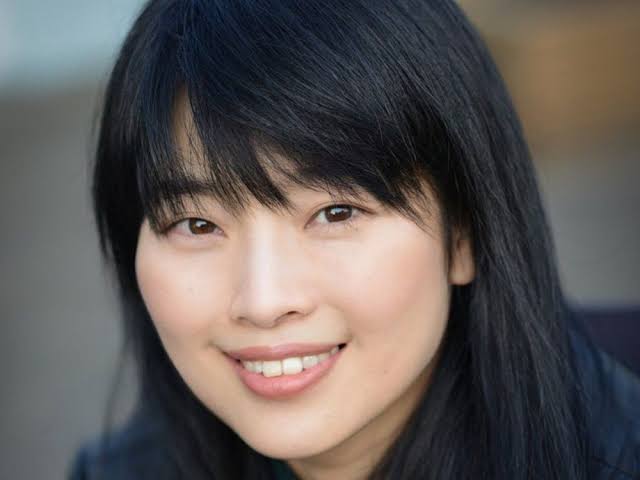
Keiko Honda is a Vancouver-based writer, former epidemiologist, and educator at SFU Continuing Studies. She is President and Executive Director of the Vancouver Arts Colloquium Society and the author of Accidental Blooms (Caitlin Press, 2023), Hidden Flowers (Heritage House, 2025), and The Broken Map Home (Caitlin Press, 2025). Words That Last is forthcoming from Caitlin Press in 2026.
References
British Museum. (2017, May 10). Hokusai: Old master. https://www.britishmuseum.org/blog/hokusai-old-master
Chan, H. H., & Thang, L. L. (2022). Active aging through later life and afterlife planning: Shūkatsu in a super-aged Japan. Social Sciences, 11(1), Article 3. https://doi.org/10.3390/socsci11010003
Coates, J. (2024). Ageing, personhood and care in Chie Hayakawa’s Plan 75 (2022). Screen, 65(3), 352–372. https://doi.org/10.1093/screen/hjae024
Merican, S. (2023, May 9). Plan 75 review: A resonant lesson in humanism. Sight and Sound. British Film Institute. https://www.bfi.org.uk/sight-and-sound/reviews/plan-75-sombre-euthanasia-movie-captures-escalating-anxieties-around-ageing
Rakuten Insight. (2022, June 29). 70% of people in Japan want to be deleted from the internet when they die. Rakuten Today. https://rakuten.today/blog/shukatsu-internet-life-after-death.html
Sony Music Masterworks. (2023, January 17). Ryuichi Sakamoto releases new solo album “12.” https://www.sonymusicmasterworks.com/ryuichi-sakamoto-releases-new-solo-album-12/
Townsend Center for the Humanities. (n.d.). Painting from memory: Aging, dementia, and the art of Willem de Kooning. University of California, Berkeley. https://townsendcenter.berkeley.edu/publications/painting-memory-aging-dementia-and-art-willem-de-kooning
Wikipedia. (2026). Plan 75. In Wikipedia. Retrieved July 4, 2026, from https://en.wikipedia.org/wiki/Plan_75
Yadav, K. N., Gabler, N. B., Cooney, E., Kent, S., Kim, J., Herbst, N., Mante, A., Halpern, S. D., & Courtright, K. R. (2017). Approximately one in three US adults completes any type of advance directive for end-of-life care. Health Affairs, 36(7), 1244–1251. https://doi.org/10.1377/hlthaff.2017.0175